
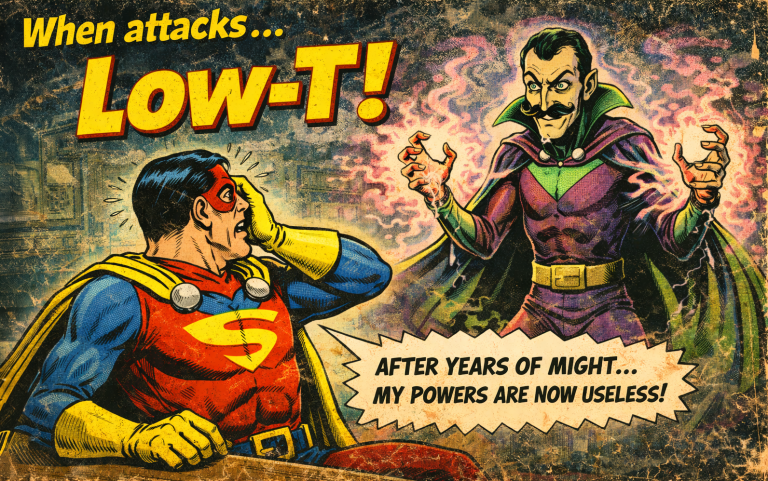
Testosterone Origin Story!
Testosterone is something most men take for granted. There’s a huge leap from pre-adolescence into the weird rip-roaring stage with a deeper voice, an Adam’s apple and the ability to lift things one-handed that has casual acquaintances contacting you out of the blue to help move large and heavy objects. That’s in large part due to the testosterone coursing its way through your body.
As a comic book fan, I always thought that most superhero origin stories were, at least in part, testosterone origin stories. Peter Parker went from a 98 lb. weakling to suddenly being super-strong and agile (shooting webs is its own metaphor) when he was fifteen. Clark Kent realized he was able to lift Pa Kent’s tractor around the same age. The trope of mutanthood in the X-Men was something that set in around puberty where previously unremarkable teens suddenly had super-strength, steel skin, excessive body hair, oversized hands and feet, etc.
The non-superpowered types just had to deal with inordinate amounts of wealth, murdered parents, suits of armor, insights into the mystic arts, induction into space police corps, etc. but their origins were decidedly non testosterone-centric. Their origins were either linked to childhood trauma or mid-life crises. Not quite the same.
While superheroes remain roughly the same age, the rest of us don’t. We slide into middle age, not realizing the gradual decline in our superpowers. I’m in my mid 40s, and the characters I grew up with haven’t missed a beat. Wolverine’s hairline doesn’t recede, Superman doesn’t get an extra layer of paunch around his inexplicably placed red drawers. Spidey doesn’t seem to run out of web-fluid (Seriously, what was Stan Lee trying to tell us here?). I can’t say the same, and all of the men I know in the same age bracket can’t either.
With Great Age Comes Great Responsibility… and Low-T
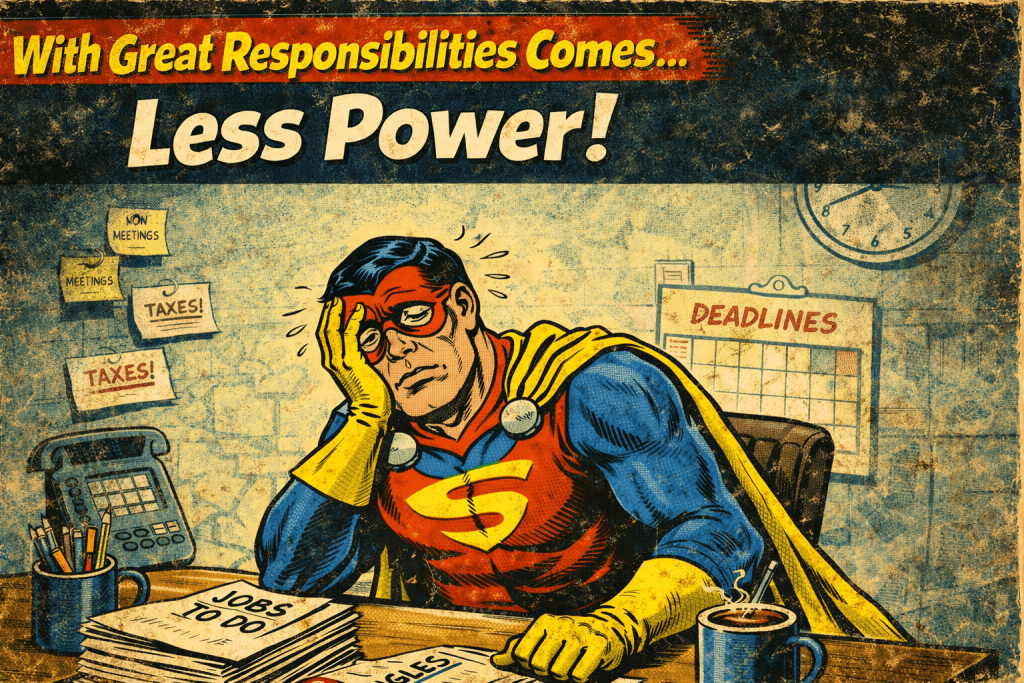
It’s easy to chalk up the lack of general peppiness in middle age to an increase in responsibilities. From my mid-20s through my early-30s, I had a lot more time on my hands in general. I was boxing twice a week, lifting weights, had an active social life, and a monthly rent under $1000.
Jump ahead ten years, and life was full of demands: Two demanding children, two demanding pets, a more demanding job, and a mortgage (any term that translates to “death pledge” implies an extraordinary level of demand). Of course I was going to be more tired and have a generally blah attitude. Of course my libido was lower than before: Who the hell feels frisky after filing taxes and sleeping with a baby monitor next to the bed? Of course I was going to be exercising less: Fitting twenty minutes on a treadmill is hard enough without prying an angry cat off of it. Every waking moment required needing to do something, anything other than focusing on my health.
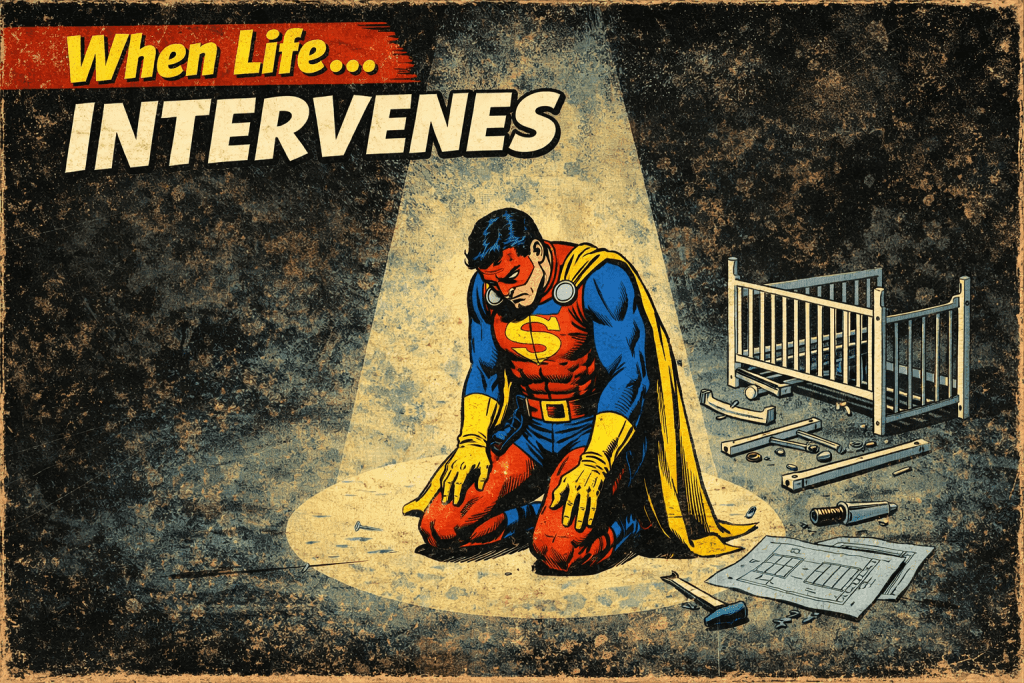
This seemed like a fair bargain: I got to be a happily married man with a beautiful family in exchange for just feeling old. Physical activity was more strenuous, I could barely remember what I walked into a grocery store for, and a catnap on the couch mid-day on the weekend sounded preferable to, well, anything.
What If?…
In between naps, inexplicably sore muscles, and generally snapping at people, I did a little bit of reading. Apparently, I didn’t quite need to be acclimating into an extended twilight into middle and old age. Maybe I was experiencing low testosterone.
The symptoms of low testosterone include:
- Irritability. (Nailed it.)
- Loss of muscle. (My shirts were looser in the wrong areas.)
- Increased body fat. (Said shirts were tighter in the wrong areas.)
- Lower libido. (None of your business, but it had been higher.)
- Brain fog. (I can’t remember if I mentioned this earlier.)
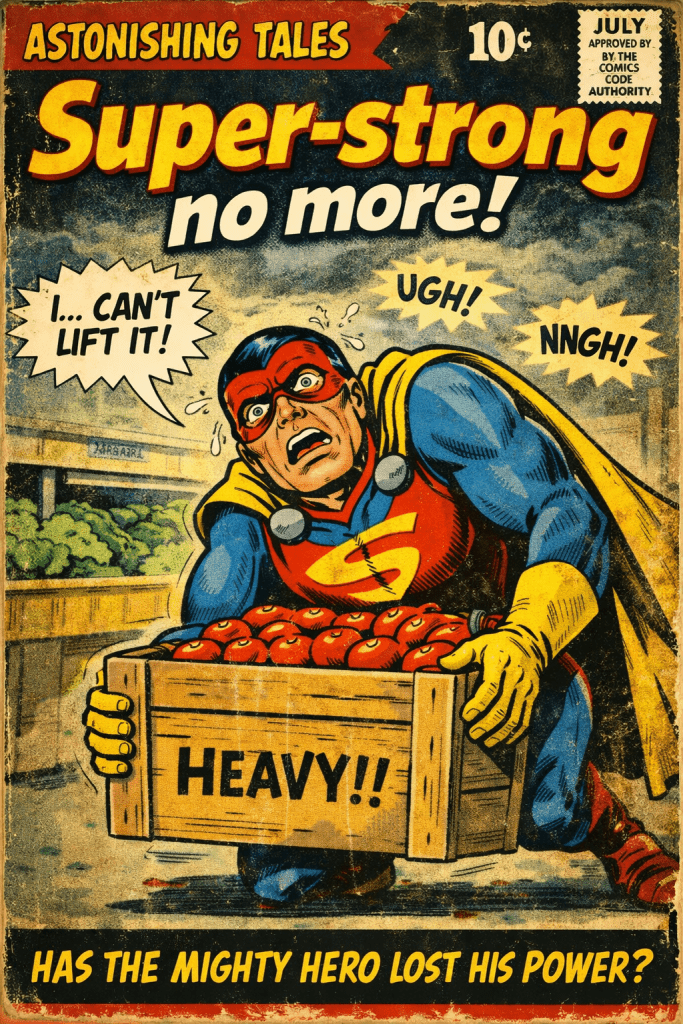
I did a blood test and found that my testosterone was low. Really low. It was so low that my doctor compared me to a eunuch. (True story, but ouch.)
This came as a surprise. I’d thought of myself and have been described by others who had no self-interest in doing so as a pretty masculine guy. It seemed like a straightforward equation: I am masculine, testosterone makes you masculine, ergo, I should have high testosterone, right?
Wrong.
By Hormones Betrayed!
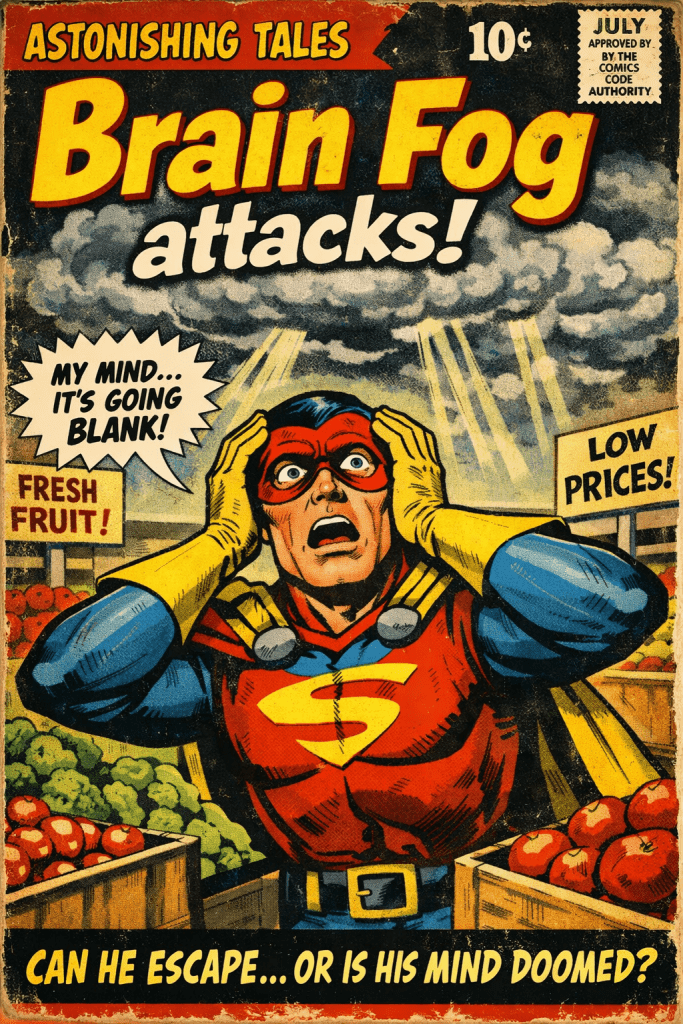
Studies have shown that as soon as a man hits his 40s, his testosterone levels decrease by roughly 1% every year. Lifestyle plays a part: Poor diet, lack of sleep, drinking too much, and smoking can increase the decline, but for middle-aged men, it’s in the cards. Even worse, the effects can build on one another: Weight gain begets sleep apnea, which leads to worse sleep, which leads to lower energy, which means you’re less likely to be in the mood to work out, all of which lead to lower testosterone.
Rather than wallow, I decided to try testosterone therapy under the advice of my doctor. For the first week or two, I didn’t notice much of a change. In the ensuing weeks, I definitely started to notice a difference. My energy level was up. I started feeling stronger and more “with it” overall. I wasn’t forgetting basic words and had fewer incidents of walking into a room and having zero idea what I was meaning to do. I felt like myself again, and had enough of a push to start working out again, eating better, and getting a solid 7-8 hours of sleep at night.
This isn’t to suggest testosterone therapy is a cure-all. Feeling run down or overwhelmed can be indicators of a gamut of physical and mental health issues that can, should, and must be diagnosed and treated by trained medical professionals. Seeking any kind of hormone therapy, testosterone or otherwise, should likewise be diagnosed and treated by a medical provider rather than self-diagnosis.
That being said, I can definitely say that getting my low-t treatment has made me feel less blah and more… super.